Almost everyone at some point in their life has either experienced shyness or considered themselves to be shy in a social setting. Shyness can be anything from being nervous about a new situation, being around people, to fear and anxiety of large groups of people and/or public places. The feeling can range from being timid or bashful to a crippling panic attack.
WHAT DOES SHY, BASHFUL, TIMID OR SHYNESS MEAN
Shyness is a reaction a person has when they feel awkward or apprehensive when trying to engage with people or when others they are not familiar with approach them. Typically in most difficult and/or challenging situations a person instinctively goes through a fight or flight type of reaction. The majority of shy type individuals want to make connections with others, however at the same time are nervous about the situation, and/or may not have fully developed the social skills to handle the experience and tend to do both fight and flight. One part of the individual wants to get away and disappear, however, the other part of them finds a way to stand their ground. Therefore the compromise in some situations is staying but not saying much, if anything. Other times keep your head down and avoid eye contact, but at the same time listen intently to everything going on. This compromise allows a shy type person to be present even though they feel awkward due to being afraid of saying the wrong thing or making a mistake. The level or degree a person has will depend on the kind and cause of their shyness.

HOW DOES ONE GET CLASSIFIED AS THE SHY TYPE
When it comes to what causes a person to become timid or bashful it’s developed or nurtured both internally and externally. Shyness in it self is not a condition but rather a general term to describe how a person may interact with others. It’s merely a way of saying a person is timid, bashful, or nervous. The only time a person is specifically referred to as the shy type of person is when the term is used like a label or title. This label or title only sticks if the person themselves or others allow it to stick.
Children begin developing a sense of self a lot of times before they reach the age of two. They then start hearing others refer to them as being or acting shy. As time progresses others continue to use the terms shy, bashful, wall-flower, and so on. They then can come to think of themselves as being shy. When this happens they start manifesting the characteristics and mannerisms of being bashful and timid toward others. It has become a part of their self-image.
~~~ SELF IMAGE ~~~
Can you change your self-image?
Yes You Most Certainly Can
As they continue to grow they sometimes start thinking they can’t do certain things or deal with certain new situations due to their fear of judgment and what others will think of them. However this is not always the case, children who grow up with supportive and understanding parents tend to outgrow their sense of nervousness about new situations, especially in cases where the label or title is not used much or at all.
With the help and support of others, they have a better positive self-image. Those who are supportive use phrases like he/she will come out when they are ready, take your time and use your words and tell us what you think/feel/ or want to say. In this way, the child has the chance to learn how to develop and improve their social skills.
WHAT CAUSES THE SHY TYPE OF PERSON TO BECOME THIS WAY?
Growing up it can be a person whether it be a parent, relative, or even a friend who tends to speak for the shy individual. The more often it happens the more the individual feels they can not answer for themselves.
They have an internal fear of rejection by others, being judged for choices they make, or the fear of not doing it right.
They experience social pressure from peers to do or act a certain way or are picked on and bullied by others.
Sometimes it’s upbringing, as in parents or caregivers setting high expectations which can cause the shy type person to not want to try new things because of low confidence and the fear of not being perfect.
Teen years and into adulthood they have trouble handling new life experiences like trying out for sports or starting a new career.
Being put on the spot and forced to deal with awkwardness, which can be anything from being forced to sit on some stranger’s knee as a child; being forced to do a presentation in front of a group or failing the class; to being made to go to a function where you don’t know anyone and perhaps don’t even have anything in common.
What do they all have in common? A negative experience with a new situation. Not just once or just one situation, but rather a variety of situations where the nervous person has not developed the necessary social skills to cope with in life.

THE SHY CATEGORIES AND TYPES
When it comes to shyness there are two categories. There is the temporary type where the person only experiences it when it comes to something challenging for them. The other one is where the nervous or timid individual deals with it ongoing. How intense on-going shyness is varies from individual to individual. It can range anywhere from low where most of the time they are just not interested or just a bit nervous, medium where generally they have low self-esteem or confidence in themselves to severe where they have serious social anxiety and even a possibility of panic attacks.
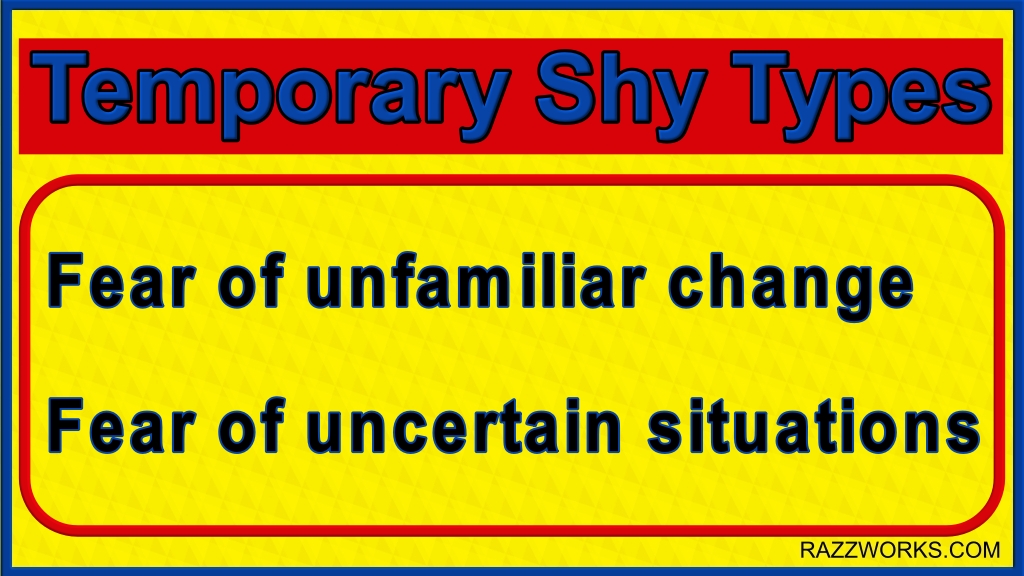
TEMPORARY SHY CATEGORY
With temporary shyness, the timid person has difficulty dealing with specific life challenges such as change and/or a situation where they are put on the spot. The feeling is generally short-term until either they have become familiar with the situation or the situation itself has passed. Also for many as they encounter a similar situation again, they tend to learn how to cope with their feelings recognizing it is short term and will pass.
Fear Of Unfamiliar Change
One of the most common types of situations the shy tends to deal with when experiencing temporary shyness is that of change. Change in location where they have to learn to adapt to a new environment. Most parents or caregivers see this first hand in their child the first time their child attends a new daycare or school. The doors open and they are faced with a room full of new faces they have never seen before. The child then needs time to adjust to the new surroundings. However, over time they get used to the new location and become familiar with the others that are attending. How long it takes varies from a few minutes to a week or two. After that things appear normal. Through life, this situation can repeat itself. The family moves to a new town and the child attend a new school. Later in the years, this temporary shyness can reoccur as they venture into the world and start joining new classes, getting their first place to live, and taking on a new job or career. In each situation of this type, a person becomes nervous about the change and after a short time, they become accustomed to the new environment and the shyness slowly goes away.
Fear Of Uncertain Situation
Another common temporary shyness is that of a very specific situation where they are put on the spot. It is when a person is challenged. The challenge could be having to write an exam, or trying out for a part in a play or sport. They are faced with trying to complete something within a certain time frame and to do well at it. The difficulty is that of standing in front of a crowd of people, whether it be the front of a classroom, office, or on a stage. The nervousness they have to deal with is often referred to as stage fright. However, once the event is over their condition tends to go away.
ONGOING SHYNESS CATEGORY
Ongoing shyness is where the shy person has to contend with feelings of anxiety on a regular basis. It can but does not necessarily mean that they have to deal with it every day or all the time. There are variations and/or degrees of intensity that the individual has to cope with in their day-to-day interactions with others around them.
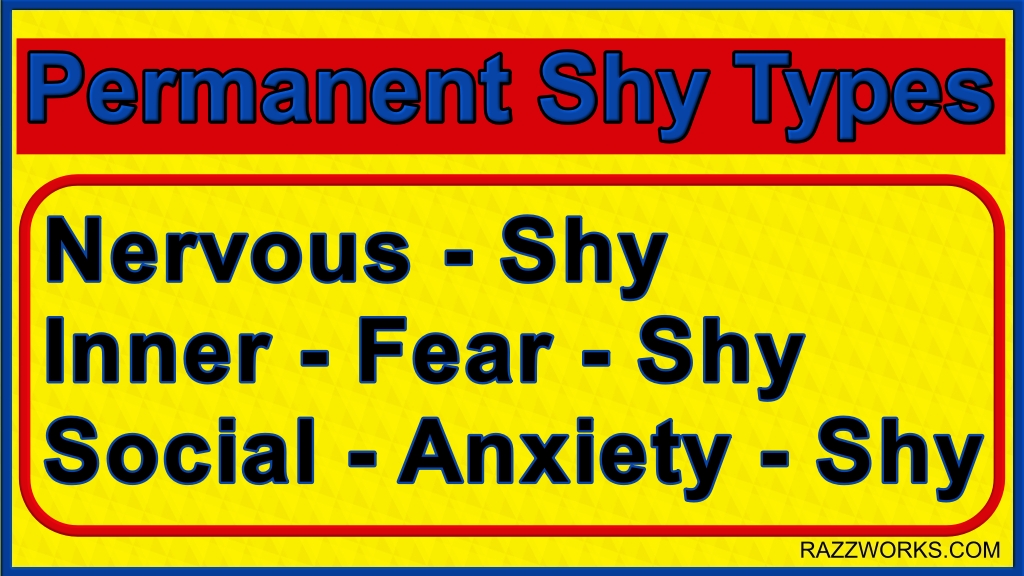
There are different levels of shyness, and the majority of people have dealt with it in their lives on one level or another. As well many have outgrown their shyness as they meet the social challenges in their lives. In general, there are 3 levels or degrees of being shy. There is the basic misunderstood shyness, inner fear shyness, and social anxiety shyness.
ARE INTROVERTS CONSIDERED THE SHY TYPE ?
Introverts
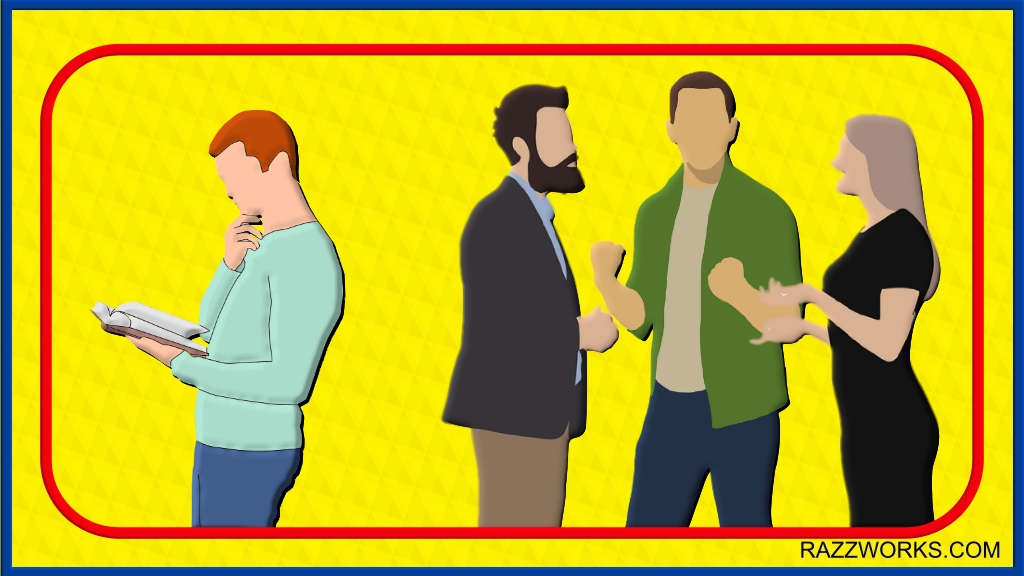
Before we go over the three basic levels of shy, let’s eliminate true introverts. Which are people who are solely introverted but not shy. Many of these individuals even resent being compared to being the shy type. Even though to others they may indeed appear to be bashful because they don’t like socializing. The fact is that they have no problem with socializing with others when they want to. The key is, when they want to. They are confident enough with themselves to function just fine at a family get-together, school function, or office meeting. However, if they have the option not to attend, they usually prefer not to go because they enjoy their solitude. They just don’t have as much of an interest in socializing with others and prefer to be left alone. When they want to socialize they do so with great confidence.
VARIOUS CATEGORIES OF ONGOING SHY TYPES
Social-Anxiety-Shy
The type of person with this degree of shyness tends to have the most difficult time. In general, they become very anxious about being involved with groups of people. They want or need to be involved in a situation where there are going to be a bunch of people however find it very difficult. Social interaction is important to them however sometimes they can get so worked up that they end up not even going. For some, it’s going to social functions, parties, and other enjoyable events. For some others, it can even include things like going for groceries, shopping malls, theatres, plays and so forth. For the shy people who deal with this degree of nervousness, it can go so far as having panic attacks whether it be in thinking too much before they go, or they get somewhere and feel they are being crowded and find it hard to deal with the situation.
~~~ ANXIOUS ~~~
Ready to find out how to reduce?
Tips For Dealing With Anxiety.
Nervous-Shy
Some introverts do fit in this level which may very well explain why people misunderstand the difference between a true introvert and an introvert who so happens to also be timid. There is a difference though. A nervous-shy person does have a small amount of nervousness when it comes to social functions and meeting new people. However, they generally do want to socialize with others. The shy person in this case tends to be more quiet however if someone strikes up a conversation with them they are more than happy to respond back.
Inner-Fear-Shy
The people in this category tend to have low self-confidence and are usually very concerned about what others think of them. They spend a lot of time worrying that they will do something wrong. Fearing they will be judged for something they say or do and worse might get rejected. They want to be with others but because of their fear end up accommodating, and trying to please everyone else. Due to having low self-esteem and self-worth they rarely ever speak up for themselves. They hesitate to say anything because they mistakenly believe that considering your own needs first is being selfish. Which is not true by the way.
IS IT POSSIBLE TO OVERCOME SHYNESS
The great news is yes you can overcome shyness. However it does not mean it will be quick, nor does mean it will be easy. There are a lot of ways to practice and work on reducing your shyness and improving your confidence to interact and socialize with others. Here are a some ideas you can take into consideration to help you overcome shyness.
When you know you are going into a situation that makes you nervous or scared relax yourself, your body and your mind by doing some simple breathing exercises. This will help with reducing any nervousness, fear or anxiety you might be starting to feel.
Do your shopping during odd hours when stores are not as busy. Malls are generally less busy in the early part of the day in the middle of the week.
Before going to a social function write a list of questions you could ask. Then read them over out loud before you go. Just before you head in, reread them so they will be fresh in your head.
Use positive affirmations to help boost your confidence so you can enter a social situation with a more positive mindset.
~~~ AFFIRMATIONS ~~~
Curious about how affirmations can help
Check out: The Benefits Of Using Positive Affirmations
Next time you are somewhere and you happen to feel nervous, look around. The odds are you’re not the only one. There are other people feeling a little bit insecure or timid just like yourself everywhere. Look around and if you see someone else who might appear nervous or bashful, go over and say hi. Helping someone else will help you.
Show up to an event early so you can get familiar with the location before others arrive. This will also allow the shy individual a chance to get to know a couple of people before everyone else starts showing up.
Spend some time talking with a professional like a therapist or counsellor. It can be very helpful in finding out why you feel this way. If you know why it’s happening, you will be closer to being able to find ways to overcome it.
The most important thing is to practice trying new ways of overcoming your shyness. Never give up. It may be difficult but not impossible. Take baby steps, one percent at a time. The hard journey will pay off in the end. I have confidence in you.
Lastly, no matter how small the victory is, it’s a victory, be proud of yourself. Every tiny step moves you forward. Congratulate yourself for every accomplishment. Even if all you do is show up and then leave, you made it there, didn’t you? That is a small win. You can also challenge yourself that next time you will attempt to open the door.
Hopefully, you found this post about the shy type to be helpful and/or interesting, if so don’t be shy and show some love. Also if you know someone you work with, go to school with or you have a friend who’s a bit bashful you could share this post with them. Thanks for stopping by and don’t be bashful, come back as often as you want to read other articles at RazzWorks.
RAZZ
Posts On Same Topic Shy
Link: Shy A Mental Shift For The Better
Link: Encouraging A Shy Person


 RazzWorks
Leave a reply to Bianca Alina Cancel reply