

WHAT IS THE MONTH KNOWN FOR?
March Calendar is the third month of the year and has 31 days in it. The biggest thing that many many Irish people love about the month is that of St. Patrick’s Day. You know Saint Patty is around the corner cause you start seeing men with shirts that read. Kiss me I’m Irish. It’s a day for leprechauns, four-leaf clovers, and dreams of pots of gold at the end of the rainbow. The most common way of celebration is for the Irish folks and their friends to hang out in a pub or their favorite watering hole. In the background you are sure to hear a song or two by the Irish rovers. Folks doing the jig and holding their mugs of green beer high in the air.
The March calendar is also known to be the time to reset clocks for daylight savings time for many as well. This is because in the Northern Hemisphere, it is considered the beginning of spring and the cold weather is slipping past. After the cold winter people are eager for warmer days to come. For those living in the Southern Hemisphere, it means it is becoming fall time. Some people say autumn. Fall, and autumn, both mean the same thing, another change in the seasons.

HOW THE MONTH GOT IT’S NAME
The March calendar was named in honor of the Roman god of war, Mars. The month of March was used to get troops and soldiers excited and prepared for the upcoming campaigning season. For months the battles had to be put on hold because of winter, so during March, they got the men ready by having a bunch of festivals, games, and celebrations to boost their morale and energy for war.

GEMSTONES
When it comes to monthly Gemstones, which can also be referred to as Birthstones, there are two common lists. Modern and Traditional. For a majority of Birthstones, they are the same, however some months do have a different stone and a few actually have more than two different birthstones associated with them.
The reason why I refer to the list with the word common is because of the vastness of our world and its history. For example, ancient Romans and Greeks had various birthstone lists due to region, astrology, or religious beliefs. There is more than one type of list. For example, one list is the one’s used in a breastplate mentioned in the bible in the book of Exodus. Another list would be an astrological or zodiac list associated more with a range of dates and star alignment.
The list of birthstones that many are more familiar with today is what some may call a jeweller’s list. The traditional, also known as ancient birthstones list came about in Poland around the 17th century. The modern list that many jewellers use was established in the United Kingdom in 1912. The key difference between the traditional and modern is that the modern ones are more transparent and similarly shaped in comparison to each other. Making it easier to set more than one in a ring as well as other types of jewerly.
Here is a list of both traditional and modern gems associated with the months of the year used by many jewellers today.
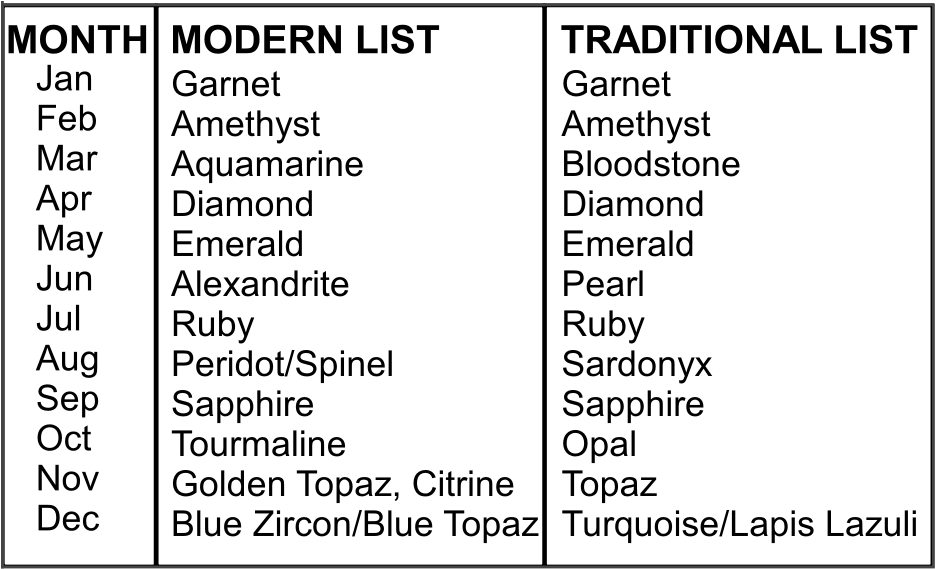
THE MARCH CALENDAR GEMSTONES
March’s modern birthstone is the aquamarine, it was traditionally the bloodstone.
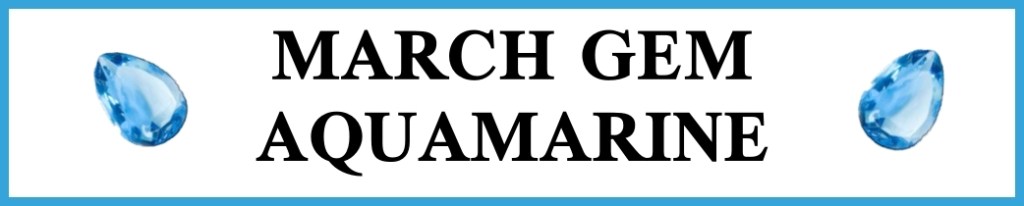
THE AQUAMARINE GEM
The aquamarine is blue to greenish blue of the beryl family. The gem’s name comes from the Latin meaning seawater.
IT’S BEAUTY
This stone is always found in the lovely lighter colours of blue and greenish-blue hues. You won’t be able to find them in the darker or deeper shades of these colours of blue or greenish blue.
SYMBOLIC MEANING
So it got its name because of how similar its colour is to that of the ocean waters. The aquamarine gem is believed to be a source of protection for those at sea. It also represents great intelligence and a happier marriage life.
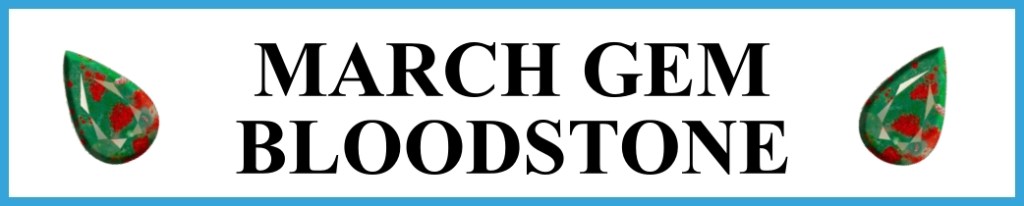
THE BLOODSTONE GEM
The bloodstone also goes by other names which are heliotrope, aggregate, blood jasper, and the martyr’s stone. The bloodstone has been used in medieval carvings. The name bloodstone came about during ancient times due to the red specks resembling that of blood drops.
IT’S BEAUTY
It is a deep green with specks of red in irregular patterns. It is a durable stone that is sometimes used for carving or creating sculptures.
SYMBOLIC MEANING
The bloodstone represents courage, strength, physical healing, and protection from negative energy. The Roman and Greek warriors would wear them to help give them endurance during battle.
So if you are more familiar with a different birthstone list in your culture, society, or heritage feel free to let us know in the comments.
PUZZLE CHALLENGE
Ahh you’re done already, well thanks for stopping by at RazzWorks, hope to see you again. Before you go here is a little word-seek puzzle for you. Can you find all the words from the article?

Razz


 RazzWorks
Leave a comment