The information you are about to read will be an overview of being stressed out in general. You are likely reading this because you are looking for more information on the subject. Perhaps it is because you have been or are currently going through it or maybe it is because you know someone who has been dealing with more than they seem to be able to handle. There are many names people use when they refer to stress in their lives. I will provide some of the more common names or words associated with it. However, for the sake of this article I will refer to it as being stressed out most of the time. Let’s first take a look at what it means.
stressed out meaning
Just before I get started with providing the basic facts about being stressed out that you are looking for. I just want to give you a quick look into what we will cover. Right after the meaning I will list some of the other names for referring to stress as mentioned I would do. We will go over the different types that there are and what they mean. Then a list of things to be on the lookout for so you can recognize the symptoms whether it is in regarding you or someone you are concerned about. Then to finish up will provide some basic things that can be done to help reduce the anxiety of being overwhelmed with stress for calming yourself down. Alright, let’s get to it.
What does it mean when a person is stressed out? When you are dealing with the pressure of feeling overwhelmed with stress it means experiencing a mental and/or physical response to external or internal pressures, which can have a wide range of effects on a person’s well-being. It’s a natural and adaptive reaction that prepares the body to face challenges that we face throughout our lives. The range of stress a person can go through could be anywhere from helpful to overwhelming and even to the point of serious unhealthy effects.
During times when you or I become stressed out, our body releases hormones like adrenaline and cortisol. These hormones prepare the body for a “fight or flight” response, increasing heart rate, blood pressure, and energy levels. This physiological response can be helpful in short bursts but problematic when it persists over an extended period. Also, our emotions and thinking responds affect focus and decision-making.
Being or feeling stressed out is different from one person to the next. However in general usually means you are frustrated with a situation or challenge in life so much that you are having trouble managing to deal with it. Whether it be work-related, money problems, or difficulty in a relationship of some sort. Many things can cause a person to become overwhelmed with stress, the 3 I just mentioned are merely some of the more common issues that affect a lot of people.
So there you have it an overall basic description of what it means to be stressed out. Now the thing is not everyone necessarily referred to this situation or condition the same way. Next, we will take a look at some other ways of referencing essentially the same thing.

stressed synonym
another word for stressed out
You have likely heard the old saying of a rose called by any other name blah blah blah. In this case, it is more like frustration called by any other name is still just as frustrating. So let’s take a look at a variety of names, synonyms, and words being stressed out is sometimes also referred to.
WAYS TO SAY STRESSED OUT
stressed, strained, frazzled, unnerved, tense, upset, troubled, agitated, bothered, flustered, pressured, distressed, tormented, hard-pressed, under pressure, at the end of the rope, back up against wall, exhausted, fatigued, beat, worn-out, beaten, spent, wiped out, overworked, overloaded, strained, overburdened, exhausted, burned out, annoyed, vexed, irritated, irked, disturbed, exasperated, drained, wore out, washed out, worn down, run down
I’m sure you have likely used one or more of these words when you felt like you had enough pressure. Tell us in the comments what your top 3 favourite words are, perhaps one of them might be a phrase not on this list. Just like there are different ways to indicate you are being extremely stressed out. There are also a variety of types as well. Let’s take a look at some of these different types and what their meaning.
BURNED OUT
Are you feeling like your mental energy is fading out
Check out: Rejuvinate before you fizzle out
types of stress
When it comes to types of stress, there are different ways of looking at it. I’m not going to list every single type out there, that just would be too much. After all the point of this article is to provide you with the basic facts so you can understand what is going on when you or someone you know could be feeling stressed out. This way you can have a good overview and understanding, I broke the list into mini sections with brief explanations within each basic type. I did my best to try and keep the explanations as concise and to only the basic facts as I could. For most of these what I wrote is only a tiny glimpse into the information available. There are entire websites built around a lot of these with very detailed information. Alright, let’s dive in and see what we can glean from this list of different types.
1 type of stress
stressed to success
This particular one is my favourite, and I wouldn’t be surprised if it is one of yours as well. Also for a fact, it is a real type and also one that can cause someone to become a little frustrated and super stressed when dealing with a problem or a snag in the process of whatever it they may be working on. However, once success occurs it washes it all away leaving nothing but a good feeling inside.
POSTIVE STRESS
This type can be very motivating. It can help someone perform better in certain situations, such as during a competition or when facing a challenging but rewarding task. At times when you run into a problem, or a difficult part of a process you can start getting a little stressed out. Especially when you can not seem to figure out what to do next or what direction to go, but then you come up with a solution because you are determined not to give up. When you finally complete it you feel this rush of accomplishment. Wouldn’t it be great if this was the only type of stress that ever existed?
2 types of stress
dealing with primary source
When a person becomes stressed out it generally is either something that is completely outside of your control and most likely isn’t even intentionally directed at you. Or something that does have some sort of personal connection with you.
ENVIRONMENTAL STRESS
This particular one is caused by things around you in your surroundings or environment. It can be things like loud noises because of construction or traffic, pollution such as smog or smoke, clutter or mess left behind in an area, being crowded by others, or sometimes extreme weather conditions making outside too hot, too cold, too wet, or even unbearable or dangerous. This type of stress can make you feel uncomfortable, frustrated or on edge because of things in your surroundings you have pretty much no control over.
PERSONAL STRESS
Primarily internal and/or directly affects you personally, sometimes intentionally by someone else. Includes things like your health, relationships, toxic people, money matters, death, and a change of location. These can cause you to feel emotionally vulnerable, cloud your thinking, or have trouble coping.
TOXIC PEOPLE
Learn how to recognize them & some tips on how to deal with them
Read: Encounters of the Annoying Kind
3 types of stress
relating to duration or time affected
This list of types indicates how much and/or how long a person has to deal with feeling stressed out.
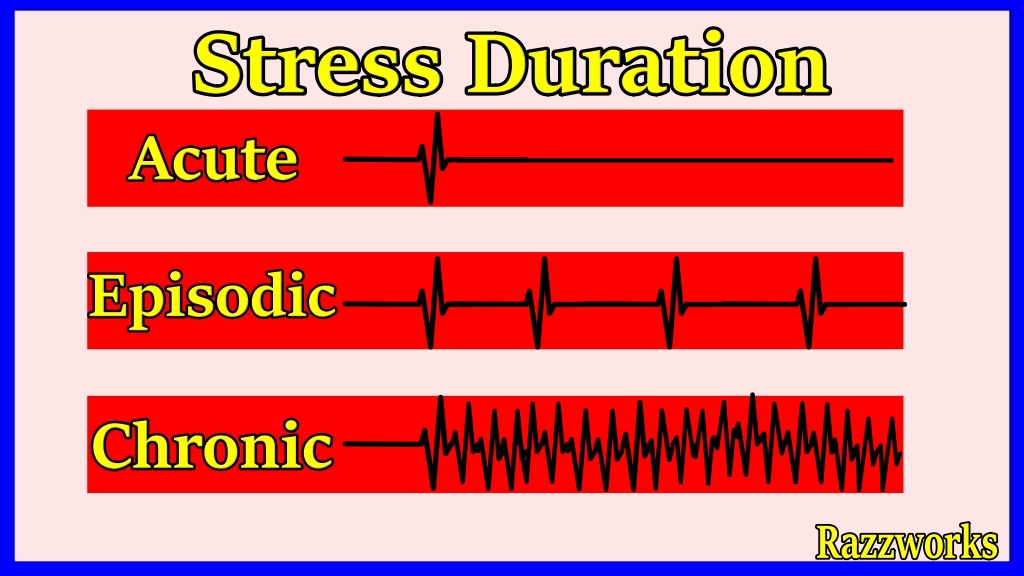
ACUTE STRESS
Acute refers to it being a short-term response to a specific event or situation. As frustrating as they can sometimes be, they generally go away in a very short period of time. Of course, a short period of time is going to vary from one situation to another. For example having to listen to a complaining customer is a shorter period than that of learning to drive a car. For the most part, once the situation or circumstance is over, it is done and doesn’t repeat itself. Unless maybe you work in the complaint department somewhere.
EPISODIC ACUTE STRESS
This is when you deal with being stressed out on and off repeatedly over a repetitive period of time. Most often when it’s on, it is intense or a lot of pressure. Causes can include ongoing work deadlines, repeating fights with friends, partners, or family, and monthly reoccurring money issues. Basically cycle of a problem gets solved or goes away, a pattern of everything is OK, ooh previous problem have showed up again, now it’s gone, ooh it’s back again. You get the point. When the problem exists you become overwhelmed and frustrated again and it seems like it never completely goes away. The best you get is a break in between. It’s a good idea to talk to someone who can help you to break the cycle.
CHRONIC STRESS
This one is the worst because it means it is a long-term one that may result from ongoing challenges like work-related issues, financial difficulties, or relationship problems. Similar causes like the previous one, however, the difference is you don’t get a break, it just seems to hang over you and is always there with what appears to be no end in site. If you feel or believe you are experiencing this type of condition, it is wise to seek professional advice to help you better manage it.
4 types of stress
different ways it affects you
The following types of stress refer to what areas of your life that are most affected. With each, I will provide a brief description. With that said I like to point out that there are pages and pages of information in relation to each one of these. Overall with this article, I am merely giving you a bird’s eye view so you can have a better overall understanding.
PHYSICAL STRESS:
This one is when your body experiences an amount of strain and/or pressure. It can happen when you push your body too hard, like carrying heavy objects or working too long or intensely at something. Physical stress can also occur when you don’t get enough rest or quality sleep that it needs.
EMOTIONAL STRESS:
When dealing with something that is close and personal to you, your feelings and emotions become overwhelmed, making it difficult to cope with your situation. It can happen when you’re worried about someone, feeling anxious, dealing with a lot of sadness, or angry about something in your life. Being emotionally stressed out can affect your mood, make you feel tense, and sometimes even lead to symptoms like headaches and/or stomachaches.
OVERWHELMED
Find out things you can do when you feel overwhelmed
Check out the article about overwhelm
MENTAL STRESS:
This type is the one most people are more familiar with, it is when you feel you are pressured with demands beyond what you can do. Usually related to pending current events causing worry, anxiety, or difficulty sleeping. Being mentally overwhelmed can cause thoughts to spin out of control, or imagine something bad is going to happen.
BEHAVIORAL STRESS:
You can recognize this type when you are having trouble relaxing and tend to to fear the worst. Feeling overwhelmed with responsibilities. Tend to be super self-conscious, worrying about everything. Sometimes they feel helpless, or not in control of their circumstances. People who feel like this tend to get poor sleep, and trouble completing certain tasks. Some develop poor eating habits, whether it be barely eating at all, or the opposite eating nothing but junk food all the time cause it makes them temporarily feel good.
symptoms of stress
Stress can manifest in various ways, and the signs of it can differ from person to person. However, there are common physical, emotional, cognitive, and behavioural signs that may indicate you are feeling stressed out. Here are some common signs to be on the look out for.
YOUR BODY:
- Bad headaches – Frequent or tension headaches can be caused by being stressed.
- Muscle Tension – Muscles become tight, especially in the neck, shoulders, and back area.
- Sleep Problems – It can cause difficulty falling asleep, staying asleep, or experiencing restful sleep.
- Digestive Issues – Stress may contribute to stomachaches, indigestion, diarrhea, or constipation.
- Changed appetite – It can affect your eating habits, leading to overeating or loss of appetite.
- Higher heart rate – Stress can elevate your heart rate and blood pressure.
HOW YOU FEEL
- Overwhelmed – Feeling overwhelmed and unable to cope with daily tasks is a very clear sign.
- Irritable mood – You may become easily irritated, short-tempered, or quick to anger.
- Anxiety levels – Feeling anxious, worried, or on edge is a common emotional response when stressed.
- Strong sadness – It can lead to feelings of hopelessness, down in the dumps, or even depression.
- Huge moodswing – You may experience mood swings, with emotions fluctuating throughout the day.
YOUR MIND
- Mentally exhausted – Mentally tired, no energy even after a good sleep.
- Hard time focusing – It can make it challenging to concentrate on tasks or make decisions.
- Memory problems – Forgetfulness and difficulty recalling information can occur due to stress.
- Negative thinking: – A poor outlook, excessive worry, & self-criticism are common responses to stress.
- Racing thoughts – It can lead to a constant stream of racing or intrusive thoughts.
YOUR ACTIONS
- Social Behaviour – withdrawal from social activities, becoming isolated, or difficulty interacting with others.
- Substance Use – Some people turn to alcohol, tobacco, or other substances as a way to cope with stress.
- Restlessness – Feeling restless, agitated, or having difficulty sitting still is very common.
- Productivity – Often it can hinder your ability to complete tasks efficiently or meet deadlines.
- Sleep Pattern – When your days are too stressful it may lead to oversleeping or insomnia.
- Procrastination – Putting off tasks or avoiding responsibilities can be a sign of stressing too much.
It’s important to recognize these signs and acknowledge when you are experiencing stress. Identifying the problem early allows you to take steps to manage it effectively, which can help prevent more severe physical and mental health issues that can come from prolonged stress. If you find that it is significantly impacting your daily life, consider seeking support from a healthcare professional such as a therapist or doctor.

how to calm down when stressed
Calming yourself when feeling stressed out is essential for managing stress and maintaining your overall well-being. Remember that different techniques work for different people, so it may be helpful to try a few of these strategies and see which ones work best for you. Having a variety of coping methods can be great for managing yourself when you feel your starting to get overwhelmed in various situations. Here are some different strategies you can try out.
BREATHING
Take slow, deep breaths. Inhale deep through the nose, hold it for a few seconds, & then exhale slowly through your mouth. Repeat this a bunch of times to calm yourself down.
RELAX YOU MUSCLES
Tense up on purpose and then relax each muscle group in your body, beginning from your toes and working your way up to your head. This can help relieve the physical tension.
VISUALIZATION
Imagine a peaceful place or scenario. Visualizing a calming scene, like a beach or a forest, can help reduce stress and anxiety.
SMELL
Use calming scents like lavender or chamomile through essential oils, candles, or incense. Aromatherapy can have a soothing effect on your senses.
BE ACTIVE
Spend some time involved with a physical activity, even if it’s just a short walk or stroll outside in the fresh air. While doing so your body releases endorphins, which are natural stress reducers.
AUDIO
Listen to your favourite relaxing music or nature sounds. Music can have a huge influence on your mood and/or stress levels.
WRITING
Write down your thoughts and feelings. A journal or notebook can help you process your emotions and gain perspective on your situation.
MINDFULNESS
Practice being mindful or mindfulness by focusing your attention on the here & now in this present moment. This can be done through meditation exercises or simply by paying close attention to your breath, bodily sensations, or surroundings without judgment.
MINDFULNESS
Want to find out how easy it is to practice mindfulness
Check out this Mindful or Mindfulness article
REACH OUT
Talk to a friend, family member, or therapist about what’s stressing you. Sharing your feelings with someone you trust can provide emotional support.
SET BOUNDARIES
Learn to say no when you’re feeling overwhelmed. Setting clear boundaries can help reduce the demands placed on you.
MANAGE YOUR TIME
Organize your tasks and prioritize them. Create a to-do list and break tasks into manageable steps to reduce feelings of being overwhelmed.
PRACTICE GRATITUDE
Take a little time to reflect on things you’re grateful for in your life. Focusing on positive aspects can shift your perspective away from the stressors in currently in your life.
TAKE BREAKS
Give yourself short breaks throughout the day, especially if you’re working or studying for extended periods. Use this time to stretch, breathe, or relax briefly.
REDUCE SCREEN TIME
Reduce exposure to screens, especially before bedtime. The blue light emitted by screens can interfere with getting the quality of sleep you need.
HUMOUR
Watch a funny video, read a humorous book, or spend time with people who make you laugh. Laughter can release tension and boost mood.
A RELAXING HOBBY
Set aside some time for activities you enjoy, such as reading, painting, gardening, a musical instrument, star gazing, or cloud watching.
I hope this information provided has given you a better understanding of being stressed out and all that it entails. Also if you are dealing with severe and/or prolonged stress of any kind, it is best to check with a professional, doctor, or someone who specializes in these areas, By having a basic understanding you will be better able to explain your situation in hopes to better able to get to the root of any issues that are causing you to become stressed out.
What is your favorite way to relax yourself when you are feeling stressed out?
By the way if you read this because of a concern you have about a friend or family member, feel free to go ahead and share this article with them. After all, knowledge is power. The power to better be able to overcome or deal with something. The better we can handle and understand, the better we can improve ourselves in the process. May you keep on going, and keep on growing in your ever-evolving journey of life.
Razz


 RazzWorks
Leave a reply to Adelheid Cancel reply