Millions of people are affected with insomnia and/or shift work sleep disorder because of nightshift jobs, shift work, split shifts, ten to twelve-hour shifts, four days on four days off, and a string of other varying types of shifts, hours, days schedules that are basically not your typical old style of working nine to five. So what do they all have in common? The answer to that is an easy one, sleep issues. These can include things like insomnia, tiredness, sleepiness, and fatigue. Simply put, difficulty to get the required rest that is needed for the human body to function properly.

When you start dealing with sleep issues, it slowly starts affecting your day-to-day functionality. We have all seen and dealt with these type of issues in our life. You don’t get the needed sleep the night before and through the day you experience sleepiness or drowsiness, others see you as grumpy or irritable, you have trouble with your concentration, you go around feeling dragged out, wiped out, low to no energy to do things.

One night of bad sleep is not uncommon. A few nights, OK, probably able to deal with it as long as you get yourself back on track if you get back to a good sleeping pattern that your biological clock craves. However, if it goes on too long, that’s when you really start having sleep issues. The first serious issue that tends to show up is insomnia. Especially for those of you that end up with irregular sleeping patterns due to your work life, like your schedule changing all the time, working odd hours, or the company having night shift jobs.

Having a job where you are required to deal with some form of shift work or graveyard hours has a tendency to create irregular sleeping patterns which over time cause many of you to deal with insomnia. What is insomnia? Insomnia whether its short-term or long term involves sleep issues like trouble falling asleep, waking up too early, or waking up in the middle of your sleep, at which time you may even experience trouble going back to sleep. Overall insomnia means you are experiencing a disruption in getting a normal amount of rest for your body so you can feel fully rested. Therefore, you wake up not feeling refreshed and ready to take on the day, simply a lousy sleep.

Dealing with irregular sleeping patterns doesn’t just give you a night of lousy rest, for some people it even goes beyond having to deal with insomnia. Quite a few people who don’t get to work a typical nine-to-five work schedule end up having to deal with a serious condition called shift work sleep disorder.

How do you recognize if you might have this sleep disorder? What exactly is this sleep issue? Well first off, it generally occurs with individuals who either have a job that requires them to work different shifts or have a graveyard shift which means they work at night and sleep during the day on a regular basis. Not only do they have to tend with insomnia on a regular basis but also due to insomnia end up living their lives feeling extremely tired all the time.
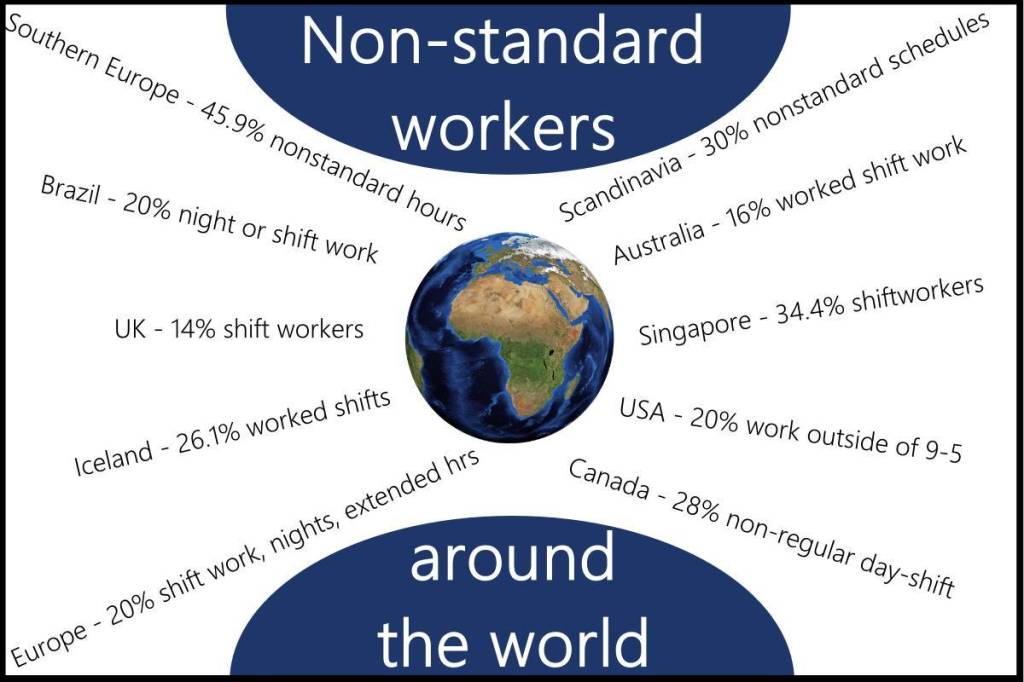
Non-traditional Hours & Irregular Sleep Patterns
Basic Info Plus Questions and Answers
The number of people who have to deal with shift work sleep disorder might be alot, and perhaps you are looking into this subject because you’re considering taking on a new career or position. One involving non-traditional hours, outside the typical nine in the morning until about five whether it be early morning, split, graveyard, rotating, four days on four days off, or ten or twelve-hour shifts. First let me say bravo, for being wise enough to do your homework before jumping to any quick decision on it. It can be tempting to take on these hours whether it’s because it might pay more, provide more hours, or you believe it will allow you to have more or better off hours for something else you want to do in your life.
The second thing I would like you to know is that I’m not suggesting you avoid these shifts. As a matter of fact, I’ve worked some of these various types of non-traditional shifts many times throughout my life, for years actually. I’m merely attempting to provide you with adequate information so you can make a more informed decision on the matter. Also for those who are currently working these various types of hours, information to assist with any work-related sleep issues they may be experiencing. Things like symptoms, what you or they may experience when visiting a doctor or specialist, along with some suggestions on how to get the required rest they need.
For those of you reading to be better prepared for non-traditional shifts, working schedules outside the typical nine-to-five tend to go against the average person’s internal clock, which can also be referred to as the circadian rhythm. However, not everyone ends up with this particular sleep disorder. Also, many companies choose to rotate the shifts in a particular order for their employees to help with reducing sleep issues, and insomnia as best they can.
Some corporations deliberately make their environment very bright and the temperature a little cooler, to help their employee’s bodies to feel more alert. Also, many people have a circadian rhythm that makes them perfect for late nightshift jobs or graveyard positions because they are more of a night owl and therefore are naturally lucky not to have to deal with sleep issues like insomnia or having shift work sleep disorder. So if that’s you then by all means go for those positions, they may even work in your favour.
Shift Work Sleep Disorder & Circadian Rhythm Questions
Is this sleep disorder permanent?
*****************************
One last piece of good news whether it’s night shift jobs or some type of varying schedule. You might be worried that if you have shift-work sleep disorder, or might end up with it, that the condition could be permanent. The good news is that, NO, it is not permanent. If your circadian rhythm gets disrupted for an extended period of time due to your job, don’t worry it can be corrected. It might be difficult and/or take some time to correct the irregular sleeping patterns however the bottom line is no it is not permanent and your biological clock will go back to what is normal and natural to you.
What is circadian rhythm?
************************
The circadian rhythm aka biological/internal clock refers to a person’s body’s operation of identifying when to wake up and go to sleep. For some people, it’s a 24hr system where around a certain time it gets drowsy and then later begins to wake you up and become alert. For others, their body operates more on the rising and setting of the sun. When the sun begins to rise they become alert, and dusk tells their body to start getting drowsy. The body system can be different however, overall, it’s whatever your body feels is its natural schedule for wakefulness and sleepiness.
What does circadian rhythm disruption affect?
*****************************************
When your circadian rhythm or internal clock gets disrupted due to irregular sleeping patterns it will very annoyingly show the following effects. First of all, you don’t feel very refreshed after what you think should be a good rest. So you end up dealing with sleepiness, feeling sluggish, and trouble being alert. Sometimes your hormones are off, feeling overheated when it’s cool and cold when the temperature is normal. You will feel the effect both on the job and during your personal time.

What Are the Symptoms of Shift Work Sleep Disorder?
Not everyone who works various irregular hours or has nightshift jobs deal with shift work sleep disorder however with many companies it can affect up to as much as 40% of these employees. For those employees, the condition is usually long-term or chronic which simply means their everyday life is affected by the condition. So if you have a job where your schedule is not the typical 9-5 and you start noticing you’re having some sort of sleep issues or insomnia. Keep a look out for these symptoms.
Besides excessive tiredness and trouble getting your needed rest, watch out for headaches, low energy, and difficulty with concentration. Other symptoms include memory issues, irritability, depression, spurts of being hyperactive, no motivation or interest to do anything, and most commonly your rest is dissatisfying, you’re not feeling refreshed or ready to start your day when you wake up.
The real reason why you want to be aware of these symptoms is because of the dangers it poses. The dangers are not just with your job but in your personal life as well. Being excessively tired can cause you to make some very serious mistakes or errors leading to serious accidents. For example, falling asleep at the wheel driving due to being exhausted. Even your physical body can start having problems if you don’t heed the warnings and let it go on too long. It can affect your overall health and your heart. Other consequences can include problems coping with friends, family, and personal relationships, becoming dependent on drugs or alcohol, and digestive and/or metabolism issues. You don’t want to ignore these symptoms.
So if you find yourself dealing with excessive tiredness, trouble getting your proper rest, headaches, trouble concentrating, and/or always feeling drained go see a doctor and/or specialist so they can help you with your physical and mental wellness.
~ Symptoms of Shift Work Sleep Disorder ~
- Inadequate sleep due to insomnia
- Moodiness
- Concentration
- Extreme sleepiness on & off the job
- Memory impairment
- Depression
- Rest incomplete or not refreshing
- Difficulty paying attention
- Excessive daytime tiredness
- Reduced motivation
- Hyperactive
- Irritability
- Aggression
- Lack of energy
~ High Risk Consequences of Ignoring Symptoms ~
Relationship problems
~~~~~~~~~
Drug and alcohol dependency
~~~~~~~~~~~~
Accidents and job-related errors
~~~~~~~~~~~~~~
Coping skills & behavioral problem
~~~~~~~~~~~~~~~~~~
Heart, digestive, and metabolism health issues
Typical Visit With a Specialist or Doctor
If you suspect or are experiencing shift work sleep disorder you will want to see a doctor and/or sleep specialist. Especially if you notice yourself with symptoms of headaches, extreme tiredness, memory issues, and difficulty concentrating. If left unchecked this can lead to more serious symptoms and consequences. By seeing a doctor/specialist, they can work with you to help get your personal wellness back on track.
When you visit a doctor/specialist, the first thing they are likely going to do is ask you a bunch of questions. Things like your medical history, how long you have been experiencing your symptoms, what type of job and hours you have, and any medications you’re currently taking if any. Then they are most likely going to do some sort of sleep study with you. It’s not uncommon for them to first begin by having you create a sleep journal.
With a sleep journal, they will want you to record in a notebook for about a week or two; when you go to sleep, and when you wake up, noting if you wake up in the middle of your rest. How often do you wake and for how long on average? Also, they may even have you hook up to a machine whether it is a take-home or in an overnight clinic. With these machines they want to check to see how your breathing is, do you stop breathing, if so how long on average, do you snore, and your heart rate. Basically, they want to rule out some of the common sleep disorders, for example, sleep apnea and narcolepsy which can be done by getting an overview of your quality of sleep, disturbances, breathing, and heart rate.
How Is Shift Work Sleep Disorder Treated?
There are many things you can do to help relieve some of your sleep issues including insomnia and shift work sleep disorder, whether it’s from variable day shifts and nightshift jobs that cause your irregular sleeping patterns. However, you must make your mental and physical wellness a priority and do what you can to get the required rest you need.
The best recommendation I can make is for you to develop a bedtime routine that will work for you, even if bedtime might be in the middle of the day when the sun is at its highest.
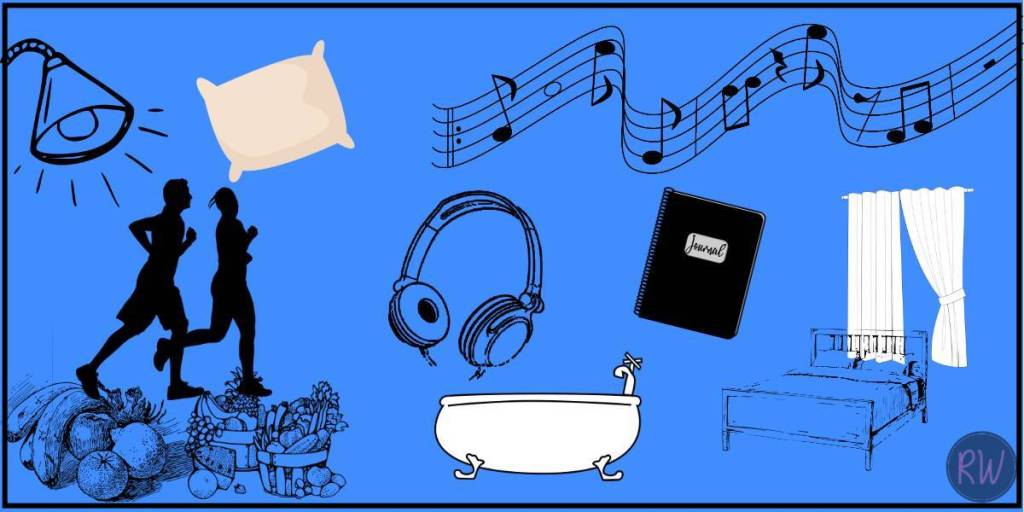
Ways To Deal With Irregular Sleep Patterns
- Decrease caffeine & sugar intake:
Avoid caffeinated drinks, such as coffee, tea, and many carbonated beverages, especially within the 4 hrs of going to bed. - A routine for bedtime:
Create a plan for having a consistent bedtime routine that you can do both on days you work and days you’re off. Make it a routine that can be followed even if you have to sleep during the day. - Write daily in a sleep journal:
Keep a sleep journal to help keep track of any problems you might be having with your rest time. Make sure to include things like how often you wake up and for how long. This way if sleep issues come up and you go to see a doctor you will have a history of your sleeping patterns. - Have naps to increase alertness:
Take a nap when you need it during off hours if possible. Working a late shift or night shift, take a ninety-minute nap before you have to leave for your job. Also if it’s one of those nightshift jobs, try to take a short nap in the middle of your graveyard shift to help improve alertness. Check with your employer first to make sure it’s ok to do so, and explain the reason why if necessary. Also if you feel drowsy when you finish your shift, take a quick power nap before leaving so you can be alert while driving. - Caffeine sources:
The number one thing that the majority of people will go for most is coffee & sugar, or caffeinated beverages. However, you have to be careful because sugar when it wears off can cause your body to crash, making you feel more sluggish and tired. Also, energy drinks with caffeine in them can be dangerous to your heart if you consume too many too often.
- Take control of the lights:
Some workplaces will equip the job site with bright lights to help improve on-the-job alertness. You can also get daylight bulbs to turn on when you’re getting ready to go to work. Use lamps with normal light bulbs and dim the lights to mimic evening. Also when driving home and the sun is coming up or it’s daylight already, wear sunglasses to help reduce your biological clock from activating. - Perfect bedroom sleep environment:
Make the bedroom as dark as possible so it will be dark even during daylight. Make sure the bed itself is as comfortable as possible including your pillow. Memory foam pillows are great because they conform to a shape optimal for your head. Don’t forget about the temperature as well, set up a fan or heater if need be. - Reduce or eliminate any noise:
Let your friends, roommates, and/or family know when you do your sleeping to decrease disruptions. Use white noise and/or earplugs to cancel out any outside sounds. If you have roommates you could ask them to wear headphones when watching TV or listening to music. - Over-the-counter Melatonin:
Melatonin is used by taking it shortly before bed to help regulate your sleep cycle so you start feeling tired. It is considered safe with a low risk of having side effects. I use it myself every night and it works great for promoting sleep.

- Have a nice hot bath:
A great way to calm the mind and relax your body muscles is by having a nice hot bath. Some people enjoy making an event of it. It can be a bubble bath or with Epsom salts. Combined with low lighting and the scent of lavender you could be feeling drowsy in no time. Just be careful not to fall asleep in the tub. - Put on some soft music:
Listening to soothing soft music can help slow your mind down and create a relaxing atmosphere when you’re trying to wind down and get ready for bed. - Have a basic workout routine:
During your waking hours when you’re not on the job, find a physical activity you can do every day. It helps your muscles to feel a bit tired and want to get some rest, making it easier for you to relax for bed. - Be aware of what you eat:
It is best to try and maintain a well-balanced diet of fruits and vegetables. Also, you will want to work on reducing how many preservatives, fats, and sugars your body takes in throughout your day. - Take Magnesium supplements:
Taking magnesium will help reduce muscle cramping or twitching. It has a relaxing effect on your muscles. - Minus screen time:
Make it a rule that for at least one hour before going to bed no screen time. By not looking at your phone, laptop, tablet, or television your eyes and mind aren’t being stimulated. Not being stimulated with sound, images, or text for one hour helps you to calm your mind down and relax easier so you can go to sleep.
Great Ideas, Let’s See How We Can Use Them
Being able to get tips tricks, ideas, or suggestions on how to solve a problem is all great and wonderful. The problem that can occur is difficulty trying to incorporate them into your lifestyle. It’s not uncommon for a person to pick one or two ideas and test them out. Sometimes they work, sometimes they don’t. You may have had great intentions to try a bunch of ideas however because you have a busy enough life as it is, you forget to go back and try some of the other ideas that you fully intended to do.
So to help you as best I can, I will provide an example of a situation and how you could build yourself a routine or ritual that will help to make the suggestions feel more realistic. Obviously, I won’t be able to cover all job-type schedules or every suggestion in one example.
The main reason for the example is to help emphasize that you need to work on creating a routine that is personal for you and your situation. It is best if you can find a way to use some of the ideas in creating a type of systematic schedule for your lifestyle so your body gets the hints it needs to know when to become drowsy and when to start becoming alert to decrease the effects of sleep issues when dealing with having irregular sleeping patterns.
With this example, I’m going to use a long graveyard night job so I can squeeze in as many of the tips as I can. That way parts of the scenario will have elements that can also be found in some of the other various schedules that occur in the daytime.
In this example, the schedule is 9 pm – 7 am with a one-hour lunch somewhere in the middle. 9 pm being evening the sun might be about to set or it could be already dark depending on your time of year and location. Also, at 7 am the sun might be coming up or already fully up depending again on your time of year and location. In this pretend situation we will say 9 pm the sun is already set and therefore it’s dark. 7 am it’s already a sun-shiny morning.
Also in this made-up scenario, you have chosen to go to bed when you get home in the morning and then later take a 60-90 minute nap before getting ready to go to work. You chose this so you can spend afternoons doing whatever you want and be able to have a meal or two with your spouse or family every day.

At work 2-3 am
OK, right now you’re in the middle of your shift. Awesome it’s lunchtime. During your lunch, you like to catch a quick 20-40 minute cat nap, have something healthy to eat and a piece of fruit, and then you’re back to work. Your job might even have one or two short breaks where you can have a light healthy snack to keep your energy up. However, you like to drink tea or coffee, so if there are only 2 or 3 hrs left to your shift, you decide you will forgo the caffeine because you want to go to bed not too long after getting home.
Time to go home 7 am
Now you’re done work for the day and it’s seven in the morning. Due to feeling drowsy and needing to drive yourself home from work, you grab a quick 15-minute nap before hitting the road. Also, you realize the sun is already in the skyline. Pull out a pair of dark-tinted sunglasses so your body will think it’s dusk and not daylight.

Made it home 8 am
Once home you make sure the blinds are down and curtains are closed to reduce the amount of light coming in. Also, perhaps you have a roommate or family getting ready to start their day. You wish them a good day, maybe even have a quick piece of toast or cereal with them. You remind them if they are going to listen to music or the news before they leave to wear headphones because you are going to be heading to bed shortly.
Bedtime routine 9 am
You go brush your teeth and have a hot bath. Then you dry off, and head to the bedroom. In the bedroom, you take melatonin. Your room is dark because of the heavy curtains on the window. You turn on a fan because it’s getting warm, or grab an extra blanket because it’s getting cool. You have a habit of never bringing your phone, tablet, or laptop into bed because the rule in your house is ‘The bed is for sleeping, not entertainment.’ You are now going to sleep for a few hours while also wearing earplugs or having white noise in the background.
Afternoon
You get up and do the things you like to do. Take some magnesium to help your muscles to be relaxed throughout the day. You also make sure to get in some sort of physical activity during your afternoon. Yard or housework, some time on a hobby, shopping, checking emails, and so on. Eat and spend time with family and/or friends.
Evening
Now because you have to go to work in a couple of hours, you now take a 60-90 minute nap with your earplugs in.
Time to start your morning 6 pm
You wake up and turn on daylight bulbs to make everything is nice and bright. Make a note in your sleep journal that you had a nap for over an hour. Because you’re a tea or coffee drinker you pour yourself a cup. Because that’s what people normally do in the morning even though it’s like 5 or 6 pm to everyone else. You eat something healthy and hearty to give you the energy you need for your work shift.

Back to work 8 pm
Then you head to your job for another graveyard shift. On your way you put on your favorite music to make the trip more lively, maybe stop and grab a coffee or tea to bring with you, get to work, and chat a little bit with your co-workers about how your day went. Then it’s nose to the grindstone until 2 am lunch so you can grab a quick 20-40 minute nap.
So there you go, an over-exaggerated picture of how you can incorporate some of the ideas into your routine. The main point is to create a routine or ritual you can follow to help let your body know when to awaken and when it’s time for rest. Go right ahead and pull the example apart and use only the ideas you like. I want to make sure you come up with a way for it to suit YOUR lifestyle. The most important thing is to get the rest you need for your physical and mental wellness.
Feel free to share the article with anyone you think this information would be useful for.



 RazzWorks
Leave a comment